
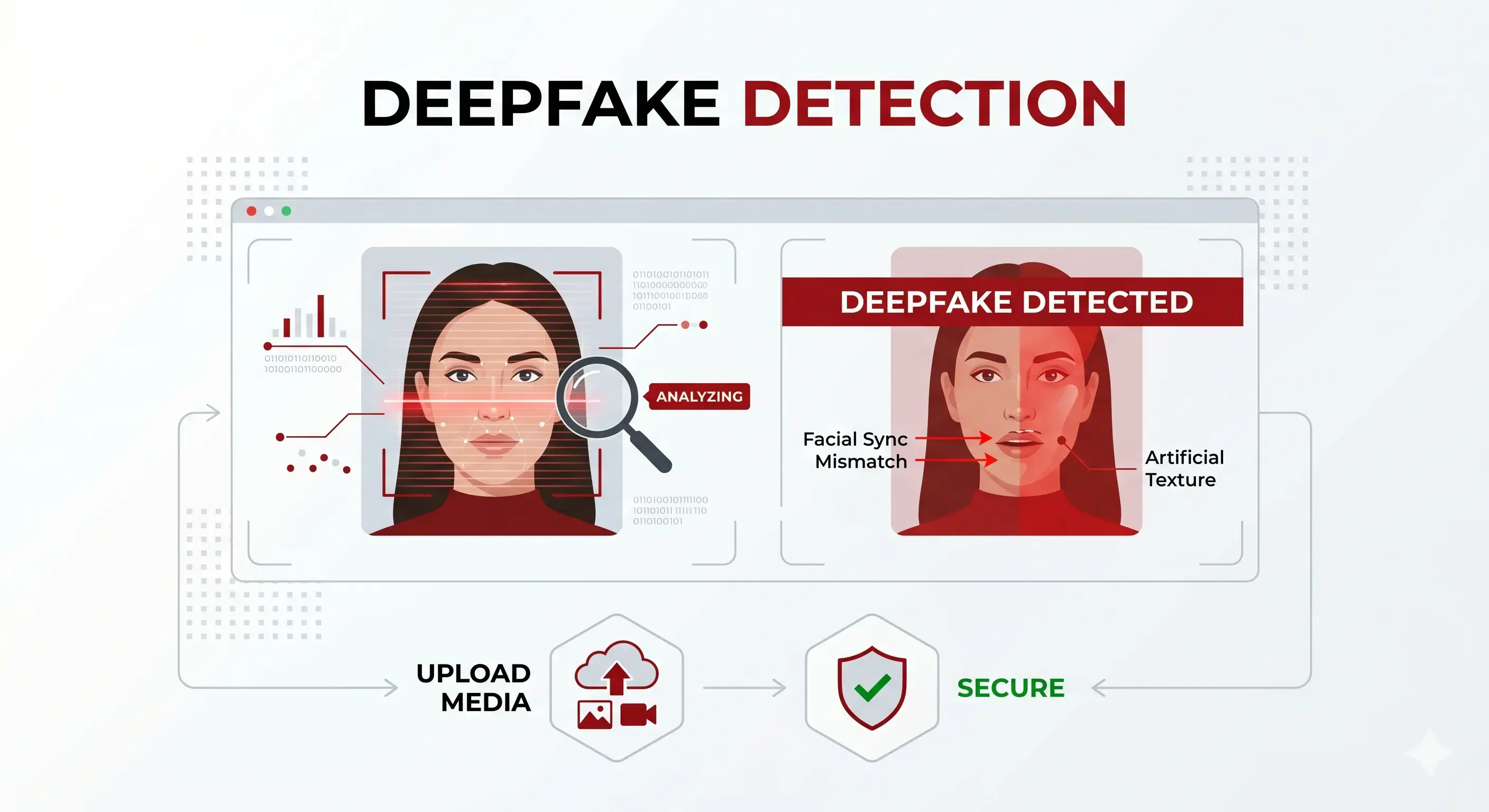
Deep Fake Image
Upload an image and automatically analyze it for authenticity and deepfake manipulation. This workflow performs pixel-level forensic analysis, frequency domain checks, metadata inspection, and generative AI artifact detection.
Advanced neural networks generate a standardized risk report with confidence scoring, manipulation heatmaps, and a synthetic media likelihood assessment to protect against visual misinformation and fraud.
Overview
Upload images to detect AI-generated content, deepfakes, and digital manipulations using advanced computer vision and forensic analysis.
Upload an image and automatically analyze it for authenticity and deepfake manipulation. This workflow performs pixel-level forensic analysis, frequency domain checks, metadata inspection, and generative AI artifact detection. Advanced neural networks generate a standardized risk report with confidence scoring, manipulation heatmaps, and a synthetic media likelihood assessment to protect against visual misinformation and fraud.
Ideal for
- Verifying user identity photos for KYC and onboarding processes
- Authenticating digital evidence for legal, insurance, or compliance claims
- Filtering out AI-generated content or deepfakes in media and news publishing
- Auditing social media profiles for synthetic or stolen identities
- Enhancing enterprise fraud prevention against manipulated documentation
Key capabilities
Generative AI Detection
Identifies signatures and artifacts left by popular AI image generators like Midjourney, DALL-E, and Stable Diffusion.
Pixel & Forensic Analysis
Performs Error Level Analysis (ELA) and noise-pattern checks to detect splicing, cloning, and digital brushing.
Metadata & EXIF Inspection
Extracts and analyzes hidden image data for inconsistencies, stripped histories, or software modification tags.
Manipulation Heatmaps
Generates a visual overlay showing exactly which parts of the image have the highest probability of manipulation.
Benefits
- Reduces vulnerability to identity theft and sophisticated synthetic fraud
- Provides actionable visual proof (heatmaps) rather than just a pass/fail score
- Automates the forensic process, saving hours of manual image inspection
- Increases trust and safety across platforms relying on user-submitted media
- Keeps pace with rapidly evolving generative AI capabilities
How it works
Upload Image
Submit the suspected image. Higher resolution images generally yield more accurate forensic results.
Forensic & Artifact Scanning
Our AI scans the image at the pixel level, searching for inconsistencies in noise, lighting, and compression levels.
- Error Level Analysis (ELA)
- Frequency Domain Checking
- Vision Transformers (ViT)
Metadata Integrity Check
The system cross-references the file's EXIF data and structural metadata to identify traces of editing software or AI generation.
- EXIF extraction
- Software signature matching
- Date/Time anomaly detection
Review Authenticity Report
Receive a comprehensive report detailing the deepfake probability score, manipulation heatmaps, and a final verdict.
- Web dashboard view
- Downloadable PDF
- API JSON output
Expected outputs
Image Authenticity & Deepfake Report
Format: PDF/HTML/JSONA detailed breakdown of the image's validity, including an overall synthetic media score and visual heatmaps.
What's Inside:
Features
Security
Encryption
AES-256
Customization
Analysis Depth
Select the thoroughness of the forensic scan
Technical details
AI Models
Vision Transformer (ViT) Ensemble, Generative Artifact Detection CNN, Forensic Noise Analysis Engine
Processing Capacity
- maxDocumentSize: 5MB
- maxTotalSize: 5MB
- concurrentJobs: 30
- averageProcessingTime: 15-20 seconds
Data Retention
- resultStorage: 30 days (if user opts in)
- documentStorage: Encrypted (AES-256), deleted immediately after processing
- exportAvailability: Unlimited
Versioning
- Version: 1.1.0
- Last update: 2025-05-26
Support
Frequently Asked Questions
Which image generators can it detect?
Signatures from generators like Midjourney, DALL-E, and Stable Diffusion.
What do I get in the report?
A manipulation heatmap showing exactly which part of the image was likely altered.